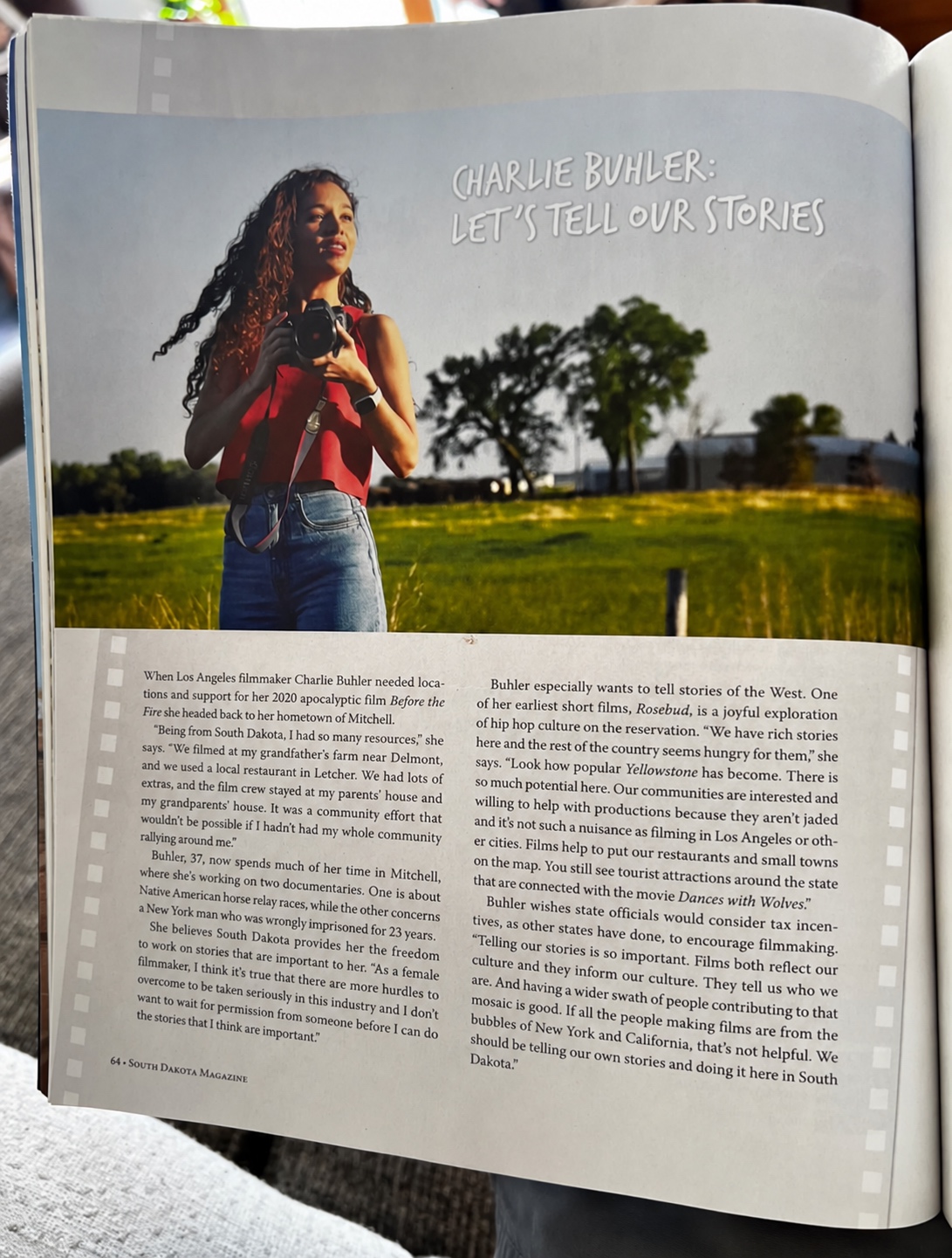
Charlie Buhler: Let’s Tell Our Stories
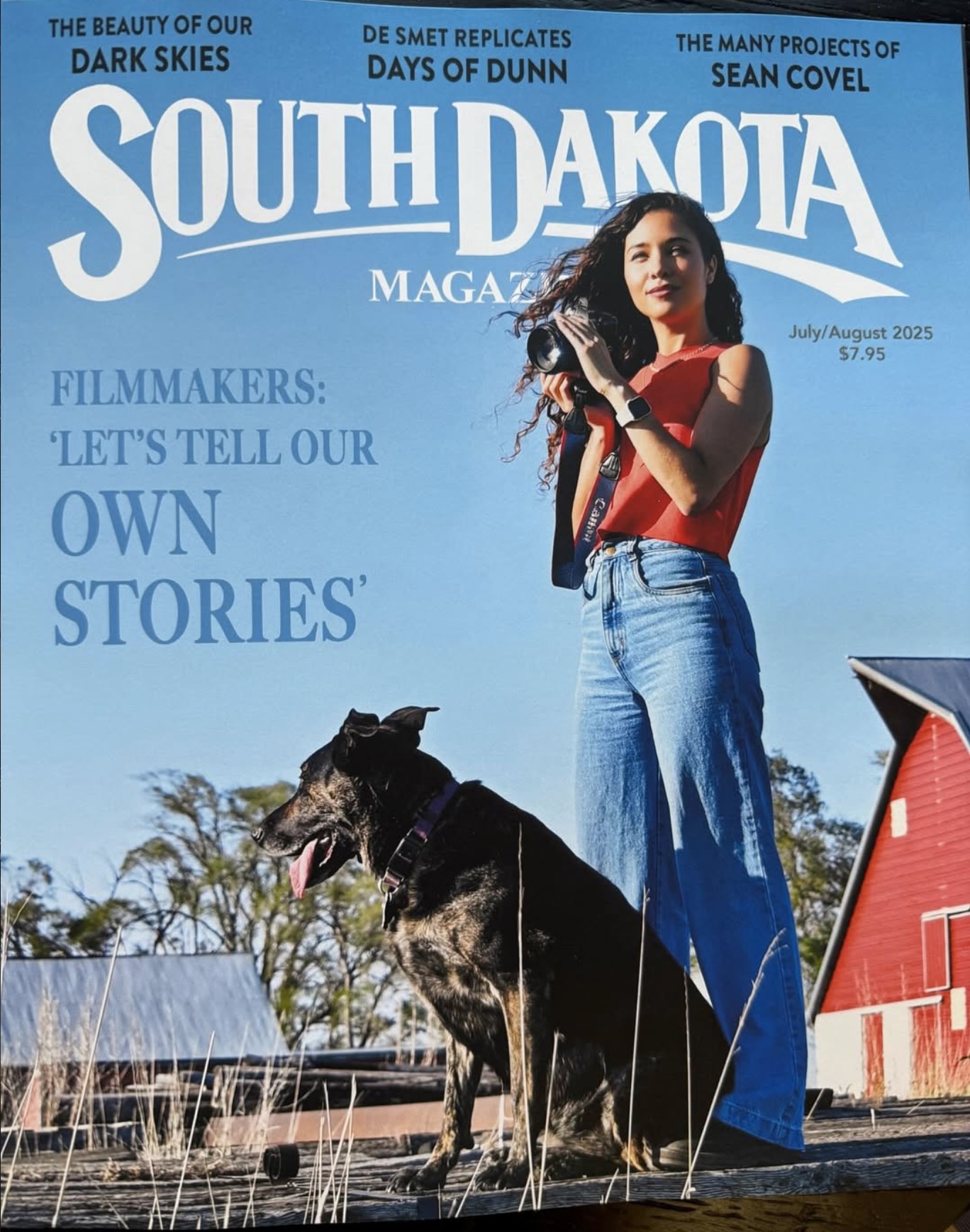
Full article
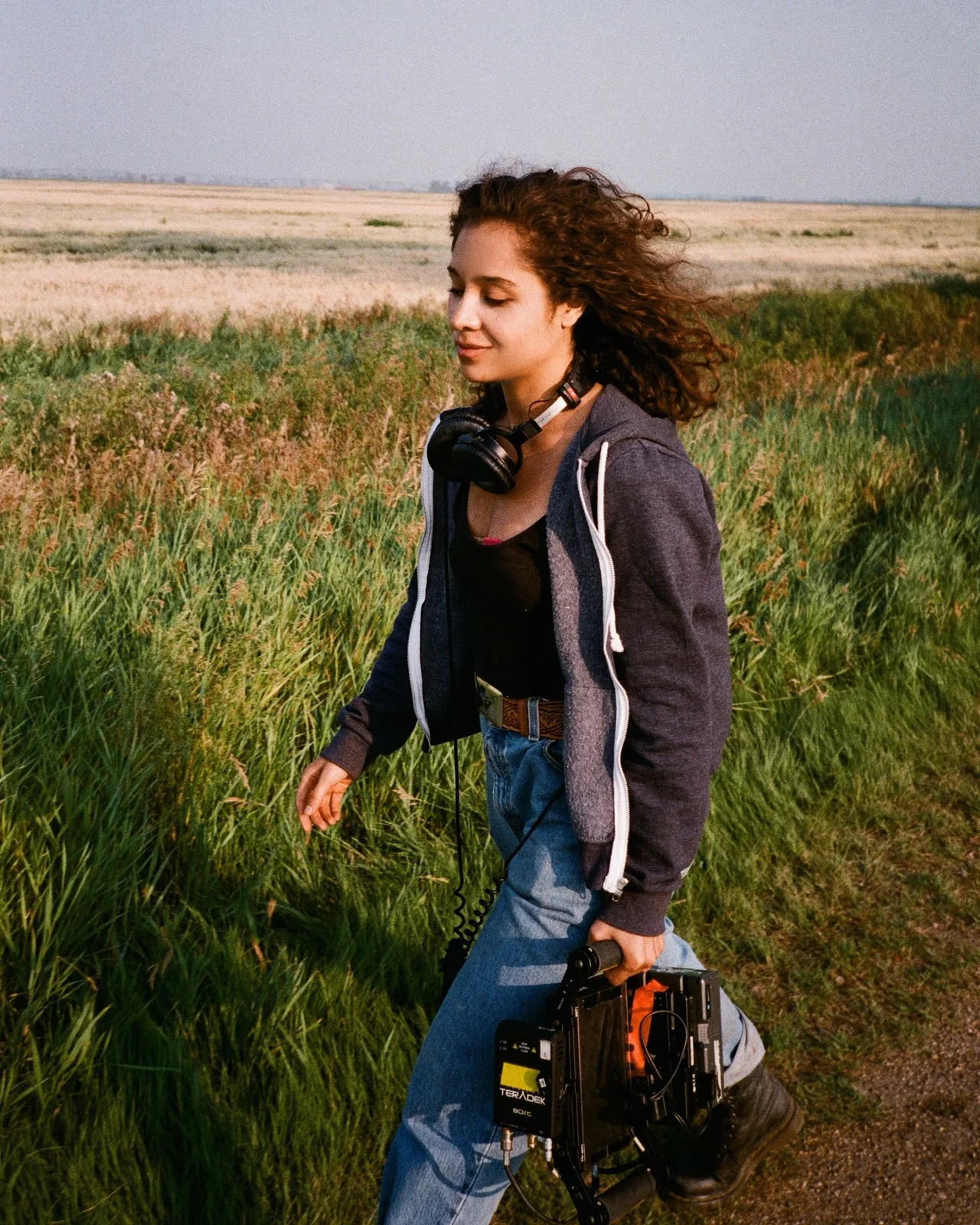
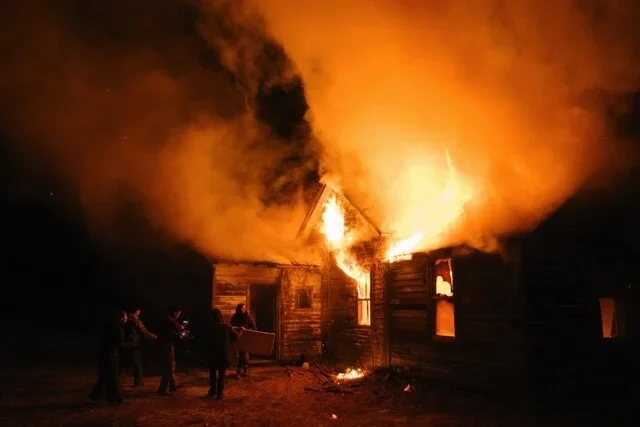
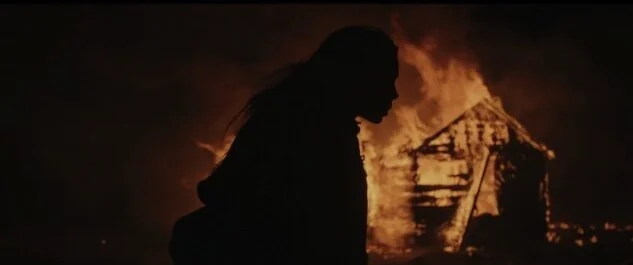
When Los Angeles filmmaker Charlie Buhler needed locations and support for her 2020 apocalyptic film Before the Fire she headed back to her hometown of Mitchell.
“Being from South Dakota, I had so many resources,” she says. “We filmed at my grandfather’s farm near Delmont, and we used a local restaurant in Letcher. We had lots of extras, and the film crew stayed at my parents’ house and my grandparents’ house. It was a community effort that wouldn’t be possible if I hadn’t had my whole community rallying around me.”
Buhler, 37, now spends much of her time in Mitchell, where she’s working on two documentaries. One is about Native American horse relay races, while the other concerns a New York man who was wrongly imprisoned for 23 years.
She believes South Dakota provides her the freedom to work on stories that are important to her. “As a female filmmaker, I think it’s true that there are more hurdles to overcome to be taken seriously in this industry and I don’t want to wait for permission from someone before I can do the stories that I think are important.”
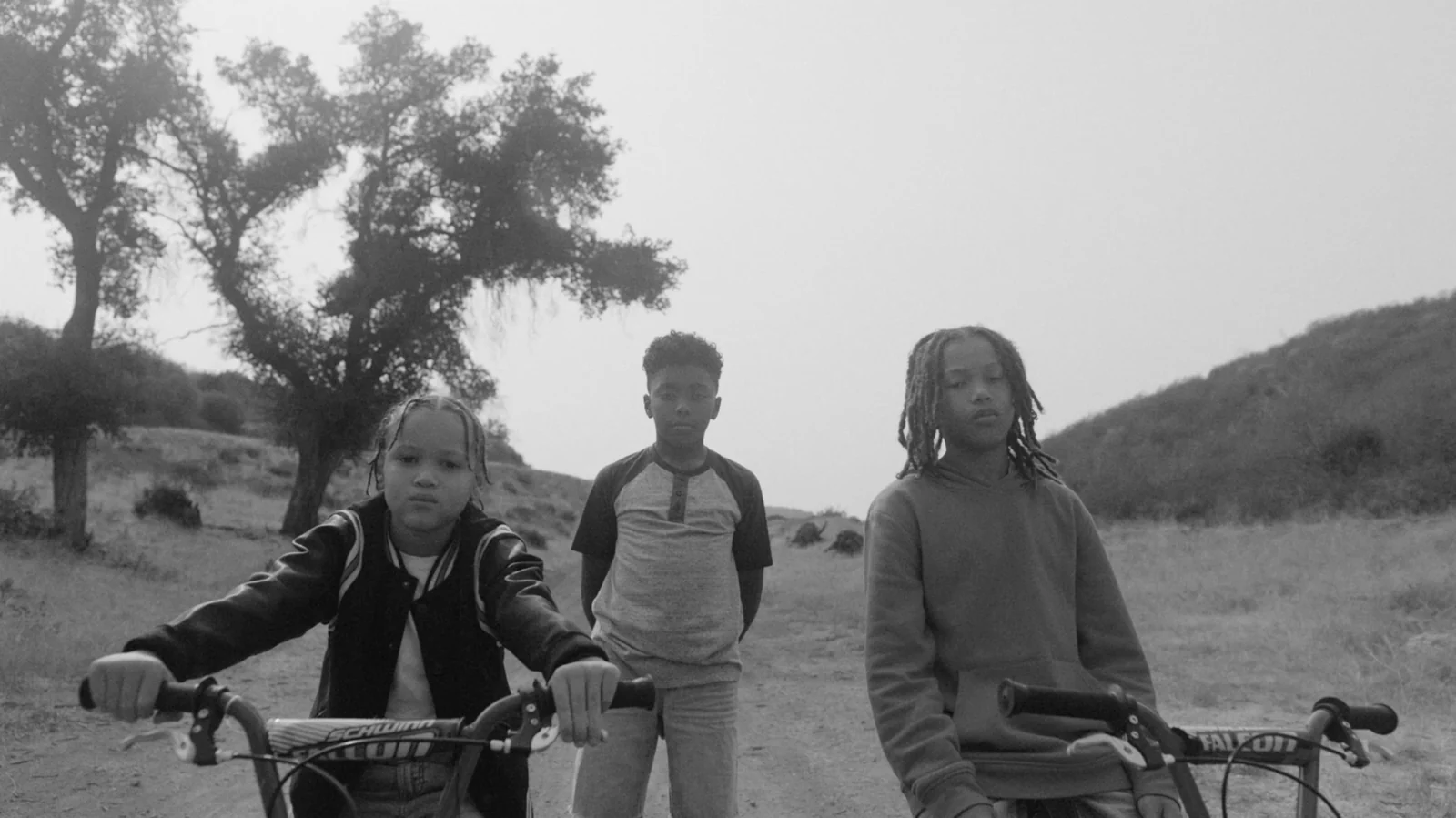
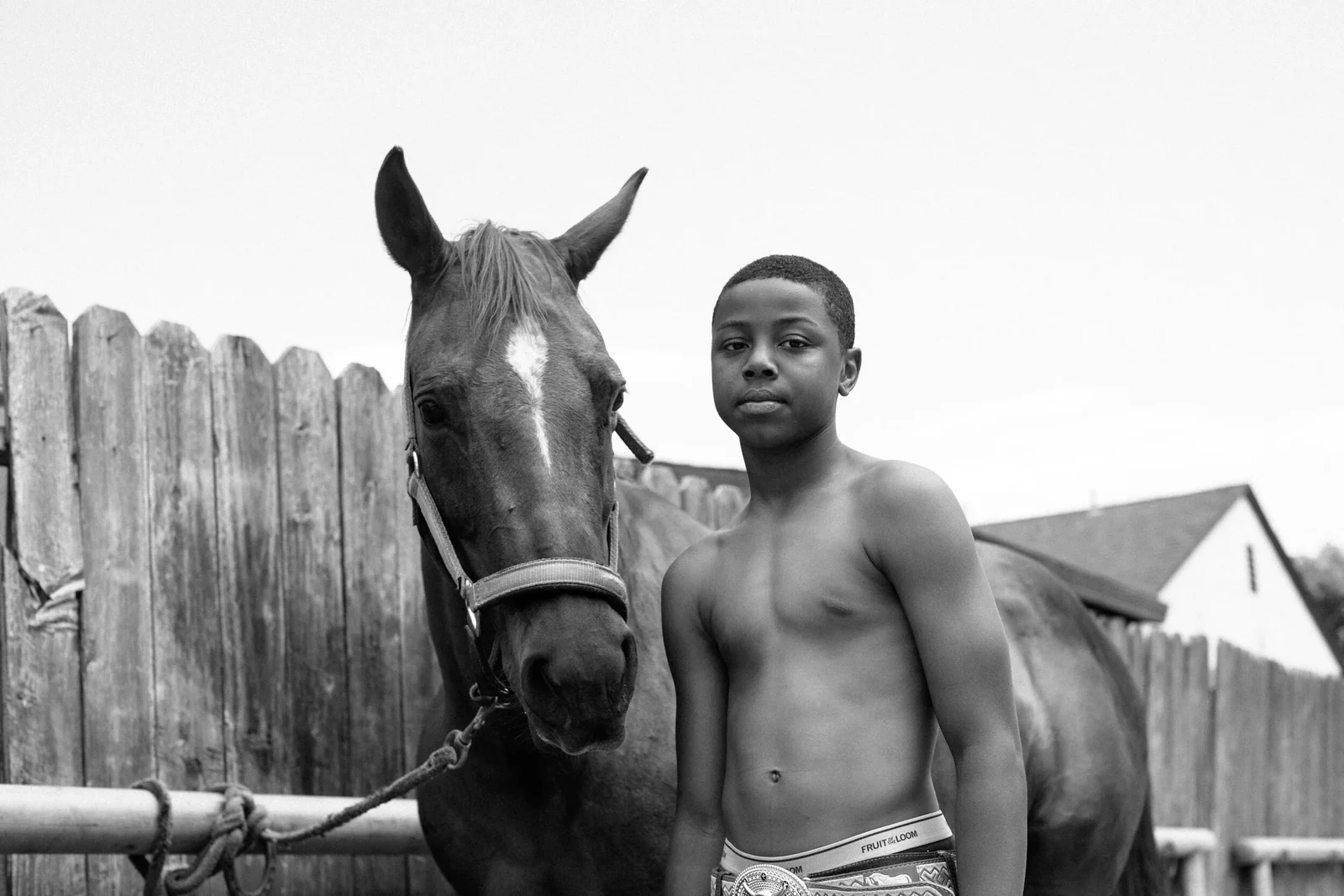
Buhler especially wants to tell stories of the West. One of her earliest short films, Rosebud, is a joyful exploration of hip hop culture on the reservation. “We have rich stories here and the rest of the country seems hungry for them,” she says. “Look how popular Yellowstone has become. There is so much potential here. Our communities are interested and willing to help with productions because they aren’t jaded and it’s not such a nuisance as filming in Los Angeles or other cities. Films help to put our restaurants and small towns on the map. You still see tourist attractions around the state that are connected with the movie Dances with Wolves.”
Buhler wishes state officials would consider tax incentives, as other states have done, to encourage filmmaking. “Telling our stories is so important. Films both reflect our culture and they inform our culture. They tell us who we are. And having a wider swath of people contributing to that mosaic is good. If all the people making films are from the bubbles of New York and California, that’s not helpful. We should be telling our own stories and doing it here in South Dakota.”